Lithium Battery vs Sodium Battery: Which One Is Better for Solar Energy Storage?
Introduction
With the rapid growth of renewable energy and battery storage systems, lithium batteries and sodium-ion batteries have become two important technologies in the energy storage industry.
As more homes, businesses, and off-grid communities adopt solar power systems, choosing the right battery technology is becoming increasingly important.
So, which is better for solar energy storage: lithium batteries or sodium batteries?
The answer depends on factors such as energy density, lifespan, cost, safety, and application requirements.
In this article, we compare lithium batteries and sodium-ion batteries to help you understand which technology is more suitable for solar storage applications.
What Is a Lithium Battery?
Lithium batteries use lithium compounds as the main material for energy storage.
The most common types include:
- Lithium Iron Phosphate (LiFePO4)
- Lithium Nickel Manganese Cobalt (NMC)
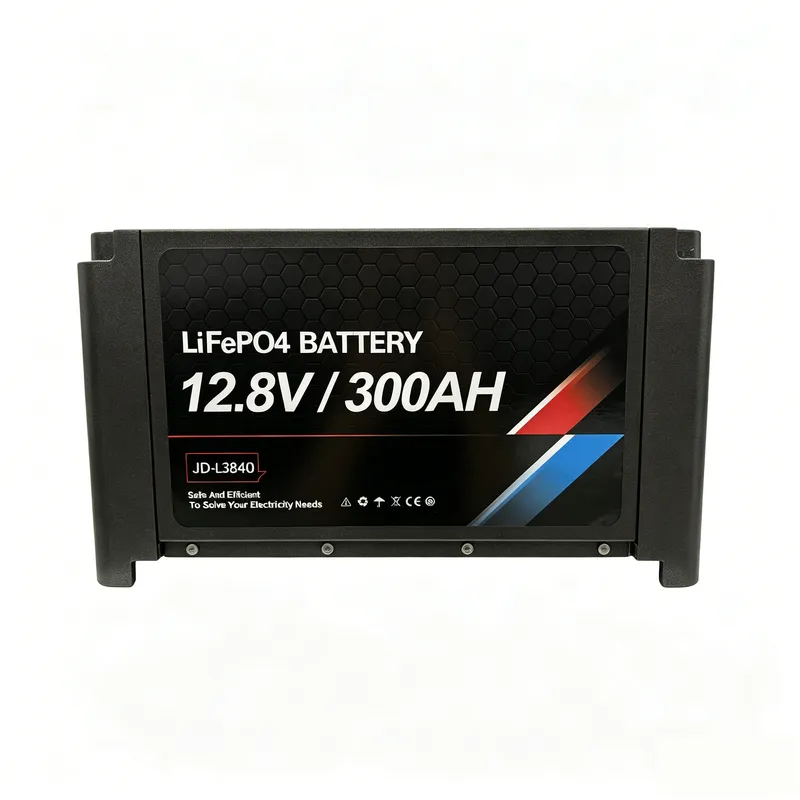
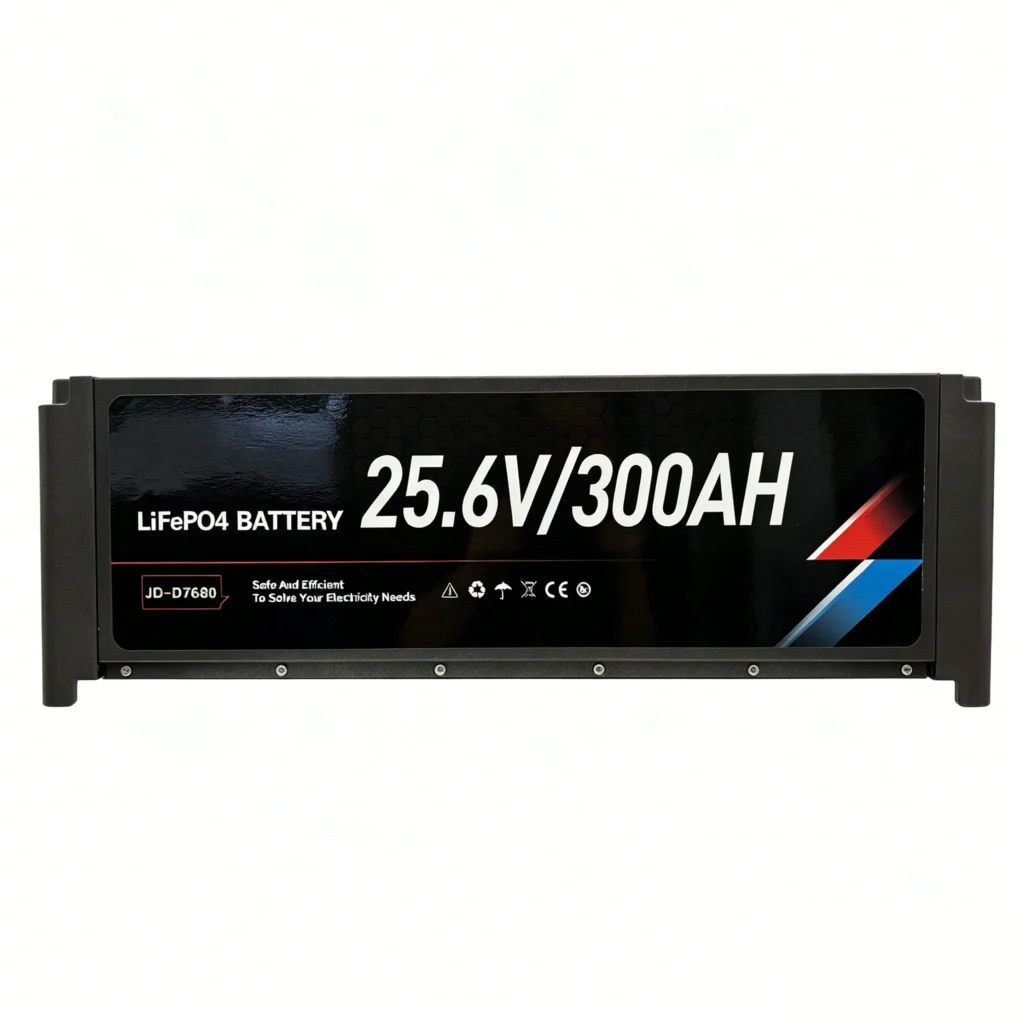
For solar energy storage, LiFePO4 batteries are currently one of the most widely used technologies.
Advantages of LiFePO4 batteries:
- Long cycle life
- High safety
- Excellent charging efficiency
- Stable performance
- Low maintenance requirements
They are widely used in:
- Home energy storage systems
- Off-grid solar systems
- RV power systems
- Backup power solutions
What Is a Sodium-Ion Battery?
A sodium-ion battery uses sodium ions instead of lithium ions to store and release energy.
Because sodium is abundant and widely available, sodium batteries have attracted attention as a potential alternative to lithium batteries.
Main advantages:
- Lower raw material cost potential
- Better resource availability
- Good safety performance
- Better low-temperature performance
Sodium-ion batteries are mainly being explored for:
- Large-scale energy storage
- Grid applications
- Cost-sensitive energy projects
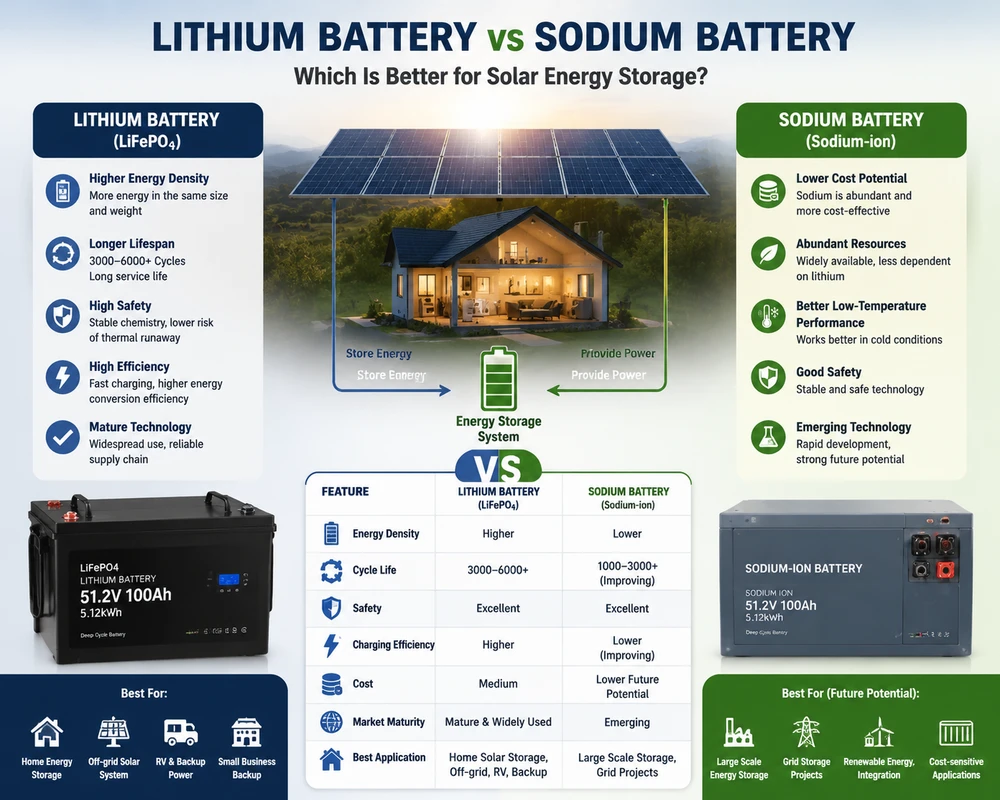
Lithium Battery vs Sodium Battery: Key Differences
1. Energy Density
Energy density determines how much energy a battery can store compared with its size and weight.
Lithium Battery:
LiFePO4 batteries generally offer higher energy density.
Advantages:
- Smaller size
- Lighter weight
- More energy in limited space
Sodium Battery:
Sodium ions are larger than lithium ions, which results in lower energy density.
This means sodium batteries usually require:
- More space
- Larger battery packs
Winner: Lithium Battery
2. Battery Lifespan
For solar storage systems, lifespan is one of the most important factors.
LiFePO4 Battery:
Typical cycle life:
3000–6000+ cycles
Depending on usage conditions.
Sodium Battery:
Sodium-ion technology is improving, but most commercial products currently have shorter or comparable cycle life depending on design.
For residential solar storage, LiFePO4 remains one of the most proven technologies.
Winner: Lithium Battery (especially LiFePO4)
3. Safety Performance
Both technologies are considered relatively safe compared with traditional battery chemistries.
LiFePO4 Advantages:
- Stable chemical structure
- High thermal stability
- Lower risk of thermal runaway
Sodium Battery Advantages:
- Good safety characteristics
- Better resistance to overheating in some conditions
Both are suitable for energy storage applications.
Result: Comparable
4. Charging Efficiency
Solar storage systems require efficient charging because solar energy availability changes throughout the day.
Lithium Battery:
Advantages:
- High charging efficiency
- Fast charging capability
- Excellent energy conversion efficiency
Sodium Battery:
Technology is improving but currently has lower commercial adoption in residential systems.
Winner: Lithium Battery
5. Cost
Cost is one area where sodium batteries have potential advantages.
Sodium Battery:
Advantages:
- Sodium resources are abundant
- Lower dependence on lithium materials
- Potentially lower future costs
Lithium Battery:
Current costs are higher due to:
- Lithium material prices
- Battery manufacturing technology
However, lithium battery production has already reached large-scale commercialization, which keeps prices competitive.
Winner: Sodium Battery (Potential Future Advantage)
6. Market Availability and Experience
Lithium batteries currently dominate the energy storage market.
They have:
- Mature supply chains
- Large-scale manufacturing
- Extensive field experience
- Established recycling systems
Sodium-ion batteries are still developing and have a smaller commercial market.
Winner: Lithium Battery
Comparison Table
| Feature | Lithium Battery (LiFePO4) | Sodium Battery |
|---|---|---|
| Energy Density | Higher | Lower |
| Lifespan | 3000–6000+ cycles | Developing |
| Safety | Excellent | Excellent |
| Charging Efficiency | Higher | Improving |
| Cost Potential | Medium | Lower future potential |
| Market Maturity | Mature | Emerging |
| Home Solar Storage | Excellent | Limited currently |
| Large Grid Storage | Excellent | Potential |
Which Battery Is Better for Solar Energy Storage?
For most residential and off-grid solar systems today, LiFePO4 lithium batteries remain the better choice.
They provide:
- Higher usable capacity
- Longer service life
- Better efficiency
- Compact installation
- Proven reliability
For applications such as:
- Home backup power
- Rural electrification
- Solar systems in Africa
- RV energy storage
LiFePO4 batteries are currently a more practical solution.
Will Sodium Batteries Replace Lithium Batteries?
Sodium-ion batteries are an exciting technology with strong future potential.
However, they are unlikely to completely replace lithium batteries.
The future battery market will likely include both technologies:
- Lithium batteries for high-performance applications
- Sodium batteries for cost-focused large-scale storage
Different technologies will serve different market needs.
Conclusion
Lithium batteries and sodium batteries both have advantages.
Sodium batteries offer promising cost and resource benefits, while lithium batteries—especially LiFePO4 batteries—currently provide better performance, longer lifespan, and greater market maturity.
For solar energy storage systems that require reliability and long-term operation, LiFePO4 lithium batteries remain one of the best choices available today.